Illinois Medical Cannabis Patients Can Shop at More Dispensaries: What the New 2026 Law Means
Illinois medical cannabis patients are gaining greater access to dispensaries across the state.
A major change to Illinois’ medical cannabis program begins in September 2026. Under Public Act 104-0463, registered qualifying patients, provisional patients, designated caregivers, and certain Opioid Alternative Patient Program participants can purchase their adequate medical supply from a broader range of licensed cannabis dispensaries as locations receive the required approval.
For patients, that could mean a shorter trip and more places to shop.
When Does the New Illinois Medical Cannabis Law Take Effect?
The legislation took effect on June 12, 2026. The new purchasing provision starts 90 days later, on September 10, 2026.
Under the amended Illinois law, qualifying medical cannabis patients may purchase their adequate medical supply at a dispensary that has been issued a Medical Cannabis Dispensing Organization license by the Illinois Department of Financial and Professional Regulation (IDFPR).
Patients may have more dispensaries to choose from as locations are approved. Read the medical dispensary licensing provision.
Each location must be approved before offering medical sales. IDFPR’s application instructions say an adult-use location cannot provide the medical patient tax rate until its medical license is issued. September 10 does not mean every recreational dispensary immediately begins medical service. See IDFPR’s licensing instructions (PDF).
What Does This Mean for Illinois Medical Cannabis Patients?
The biggest benefit is greater access.
Previously, patients in the Illinois Medical Cannabis Patient Program had to pay close attention to which dispensaries were authorized to serve medical patients. The new law allows more locations to become authorized to provide medical cannabis.
That can be especially helpful for patients who:
- Live far away from a dispensary authorized for medical sales
- Travel frequently within Illinois
- Have difficulty making long trips
- Want more convenient access to cannabis products
- Prefer to shop at a dispensary closer to home or work
- Want additional choices when comparing products and prices
The Illinois Cannabis Regulation and Tax Act now specifically provides that a medical cannabis dispensing organization may sell cannabis to qualifying patients, provisional patients, designated caregivers, and other authorized participants.
Medical Cannabis Patients Still Need Their Medical Registration
This new law does not mean that a person can simply walk into a dispensary and receive medical cannabis without being a registered patient or another authorized program participant.
If you want to purchase cannabis as a medical cannabis patient, you still need to meet the applicable Illinois medical cannabis program requirements.
A registered medical patient can purchase an authorized medical supply under the medical program’s rules.
Illinois law defines a qualifying patient as someone diagnosed by a certifying healthcare professional as having a qualifying debilitating medical condition.
Medical Cannabis vs. Adult-Use Cannabis in Illinois
Illinois has both a medical cannabis program and an adult-use cannabis market.
Adults 21 and older may purchase adult-use cannabis from licensed adult-use dispensaries. Medical cannabis patients, however, participate in the state’s medical cannabis program and can receive the benefits associated with their medical status.
The 2026 law makes an important distinction for tax purposes. Qualifying purchases of an adequate medical supply from a properly licensed medical cannabis dispensing organization are treated as medical rather than adult-use cannabis under the amended statutory definitions.
According to the Illinois Department of Revenue:
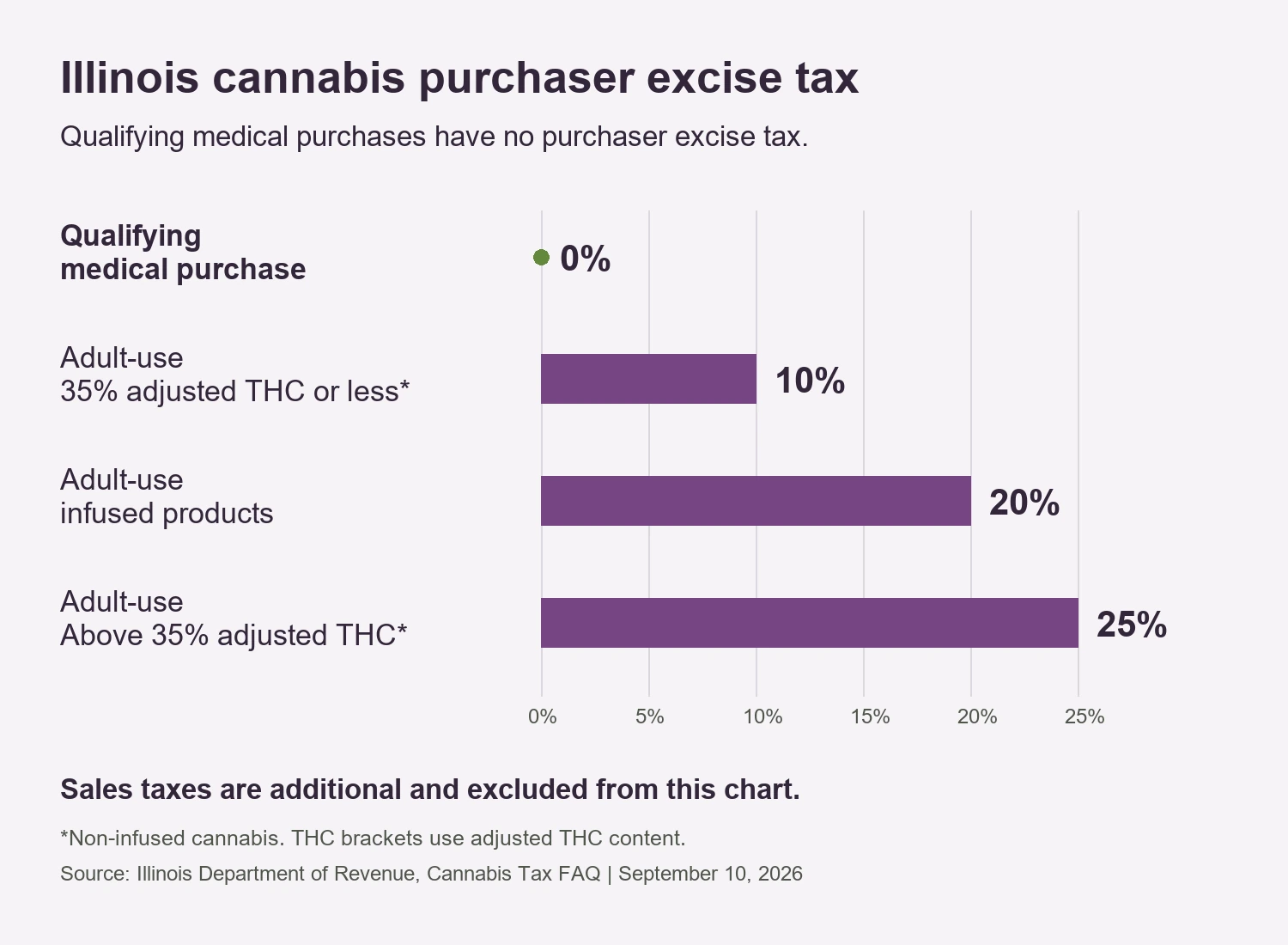
- Medical cannabis: qualifying medical purchases have no cannabis purchaser excise tax. A 1% state sales tax rate generally applies; Regional Transportation Authority and Metro-East Transit District taxes can also apply.
- Adult-use cannabis: a 6.25% state sales tax rate and applicable local taxes apply, plus a purchaser excise tax of 10% for non-infused cannabis at or below 35% adjusted THC, 25% above 35% adjusted THC, or 20% for infused products.
Medical tax rates can lower the cost of a qualifying purchase. Actual totals depend on the transaction and location. Check Illinois’ official cannabis tax FAQ.
Patients should ask the dispensary how their medical purchase is being processed and what taxes or charges appear on the receipt.
More Choice Can Mean More Convenience
For many Illinois medical cannabis patients, convenience is one of the most important benefits of the new law.
As more locations receive approval, patients may find a medical dispensary closer to home.
More participating dispensaries can also mean greater access to different:
- Cannabis flower
- Pre-rolls
- Concentrates
- Tinctures
- Edibles
- Topicals
- Cannabis-infused products
Product availability varies by dispensary, so patients should check with the individual location before making a trip.
You can explore MCO’s dispensary partners when planning a visit. Confirm the specific location’s medical license, medical service start date, and product availability; a partner listing does not establish medical licensing.
Why Having a Medical Cannabis Card Still Matters
With recreational cannabis available to adults 21 and older, some people may wonder why they should maintain medical cannabis registration.
Qualifying patients can receive medical tax treatment and purchase under the medical program’s rules.
A medical cannabis registration identifies the patient as participating in Illinois’ medical cannabis program and can provide access to medical purchasing and protections that are different from simply purchasing cannabis as an adult-use consumer.
The Illinois Cannabis Regulation and Tax Act also requires medical cannabis warning labeling when cannabis is dispensed to registered qualifying patients and other authorized medical participants.
How to Get an Illinois Medical Cannabis Card
If you are considering the Illinois Medical Cannabis Patient Program, the process begins with determining whether you qualify.
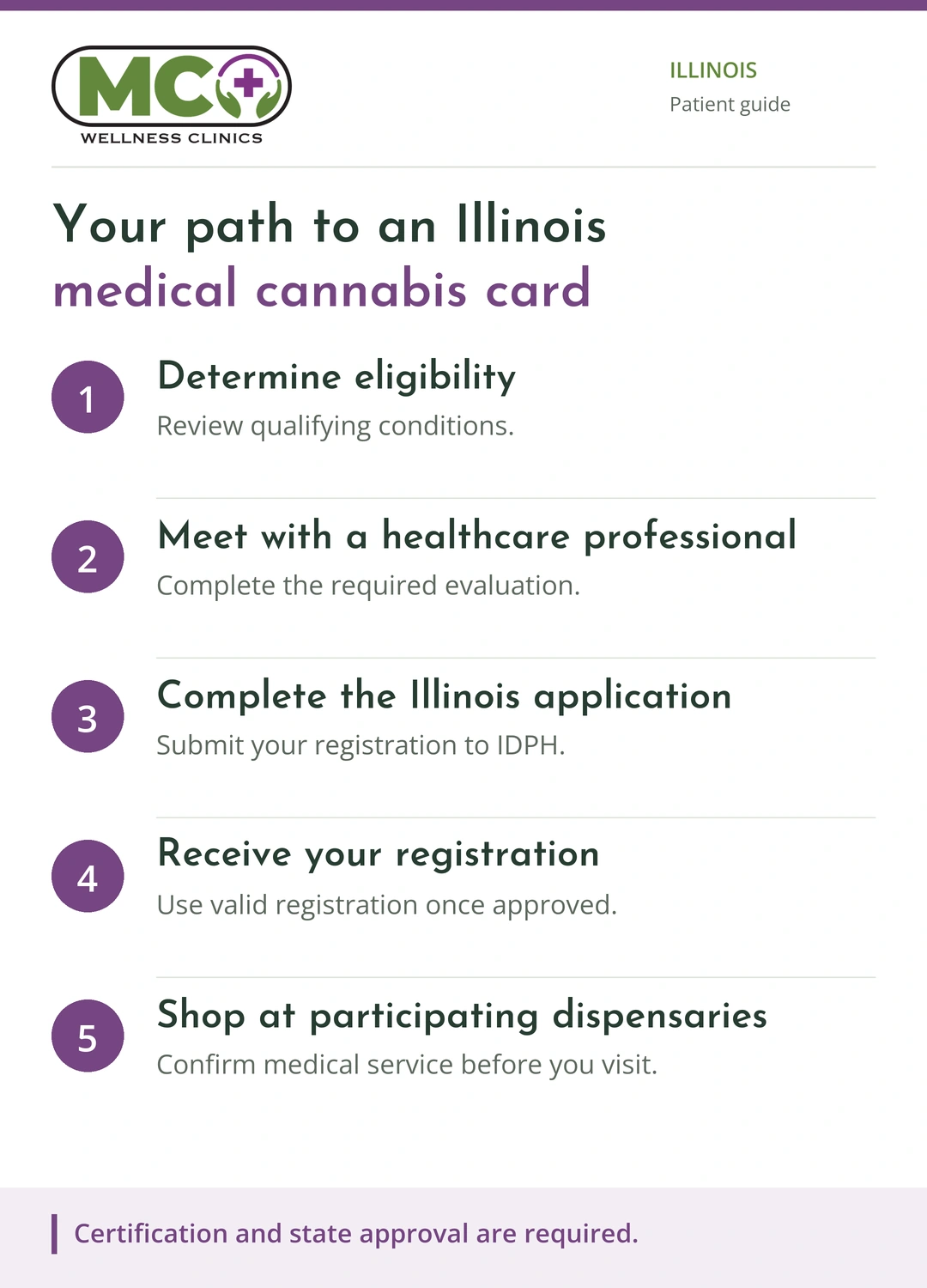
Step 1: Determine Eligibility
Illinois residents may qualify if they have a qualifying debilitating medical condition or otherwise meet the requirements of the state’s medical cannabis program.
Illinois recently expanded its list of qualifying conditions. In August 2026, the Illinois Department of Public Health announced that sickle cell disease and polyendocrine metabolic ovarian syndrome with chronic pain had been added, bringing the list of debilitating conditions to 58. Read IDPH’s announcement and review the current qualifying conditions.
Step 2: Meet With a Certifying Healthcare Professional
A qualifying patient must receive the required medical certification from an eligible certifying healthcare professional.
The certification process involves evaluation of the patient’s medical condition and medical history. Illinois law requires a bona fide healthcare professional-patient relationship and an appropriate physical examination for the written certification. Certification is a clinical decision and is not guaranteed. Read Illinois’ certification requirements.
Step 3: Complete the Illinois Application
After receiving the required certification, the patient completes the applicable registration process with the Illinois Department of Public Health.
The Illinois Medical Cannabis Patient Program provides application resources for new and existing patients.
Step 4: Receive Your Medical Cannabis Registration
Once approved, patients can use their medical cannabis registration to participate in the Illinois Medical Cannabis Patient Program. Registration cards are available through the patient account for downloading or printing.
Step 5: Shop at Participating Dispensaries
Beginning September 10, 2026, qualifying registered patients and other authorized participants can purchase their adequate medical supply from a dispensary that has obtained the required Medical Cannabis Dispensing Organization license, subject to the program’s rules and limits. Confirm that medical service has started at the location before visiting.
What Is an “Adequate Medical Supply”?
Illinois law generally defines an adequate medical supply as 2.5 ounces of usable cannabis during a 14-day period, unless a patient receives an approved waiver allowing a different amount based on medical need.
Patients should always follow their individual medical program requirements and remain within applicable possession and purchasing limits. The definition does not authorize possession above 2.5 ounces at any time without IDPH authority. Read the adequate medical supply definition.
Get Help With Your Illinois Medical Cannabis Certification
Illinois residents can contact MCO Wellness for help understanding certification and arranging a medical evaluation.
Our Illinois guide explains the requirements, appointment preparation, and next steps.
Frequently Asked Questions About the New Illinois Medical Cannabis Law
Can Illinois medical cannabis patients buy from recreational dispensaries?
Beginning September 10, 2026, the new provision allows qualifying registered medical cannabis patients to purchase their adequate medical supply from dispensaries that have obtained a Medical Cannabis Dispensing Organization license. The law does not mean that every adult-use dispensary automatically serves medical patients. The dispensary must have the required medical license and begin medical service.
Do I still need a medical cannabis card?
Yes. The new law expands where qualifying medical patients can purchase cannabis; it does not eliminate the requirements for participating in Illinois’ medical cannabis program.
Can someone under 21 use the new law?
Medical cannabis rules are different from adult-use rules. Patients under 21 may participate in the medical program when they meet the applicable requirements, but purchasing rules and product restrictions can differ based on age and patient status.
Will medical patients pay adult-use cannabis taxes?
Qualifying medical purchases are treated separately from adult-use cannabis. The state medical sales tax rate is 1%, certain regional transit taxes can apply, and medical purchases are exempt from cannabis purchaser excise tax. Review your receipt and ask the dispensary about the taxes on your purchase.
Can I use my medical cannabis card at any dispensary in Illinois?
Under the expanded purchasing provision, a qualifying patient can purchase at a dispensary that has been issued a Medical Cannabis Dispensing Organization license, subject to the applicable rules. Confirm that the specific location is authorized and processing medical sales.
Can I still shop at a medical-only dispensary?
Yes. Medical cannabis dispensaries remain part of Illinois’ regulated cannabis system.
Can I choose any dispensary that is convenient for me?
The new purchasing provision creates more flexibility as dispensaries participate. However, patients should confirm that the particular dispensary has the required medical cannabis license before making a trip. Illinois provides cannabis consumer resources through the state’s regulatory agencies.
What products can medical cannabis patients purchase?
Available products may include flower, concentrates, infused products, tinctures, edibles, and other cannabis products permitted under Illinois law. Product selection varies by dispensary.
How much medical cannabis can I possess?
Illinois law generally defines an adequate medical supply as 2.5 ounces of usable cannabis for a 14-day period. Possession above 2.5 ounces requires IDPH authority. Follow your approved allotment and applicable program rules.
Does the new law eliminate the medical cannabis program?
No. The medical cannabis program remains in place. The major change is that qualifying patients have expanded access to dispensaries that are authorized to serve medical patients.
Where can I get help obtaining an Illinois medical cannabis certification?
MCO Wellness provides information and assistance regarding the Illinois medical cannabis certification process. Learn about Illinois certification with MCO Wellness.
What This Means for Illinois Medical Cannabis Patients
Illinois’ 2026 law allows more dispensaries to apply to serve medical patients.
Starting September 10, 2026, qualifying registered patients can shop at additional locations as those dispensaries obtain the required medical license and begin medical sales. Patients should confirm medical service before visiting and continue to follow their registration and purchasing requirements.
If you are considering an Illinois medical cannabis card, review the eligibility requirements and talk with a certifying healthcare professional about your medical history.
Contact MCO Wellness for help understanding the certification steps. Learn more about Illinois medical cannabis certification.
Information checked September 10, 2026. This article is for educational purposes and is not legal, medical, or tax advice. Illinois cannabis laws and administrative rules can change. Patients should verify current requirements with the Illinois Department of Public Health and Illinois cannabis regulators.
Start with the right information
Find your state’s medical cannabis process
Choose your state for accurate eligibility, application, and appointment guidance.
- Confidential support
- Telemedicine where permitted
- Clear next steps
Don’t see your state? Ask our team or call 844-626-4200.